
Why Study Central Park Vendors
This project documents Central Park vendors’ everyday lives, illuminating labor, migration, and place-making through long-term, collaborative ethnographic storytelling.
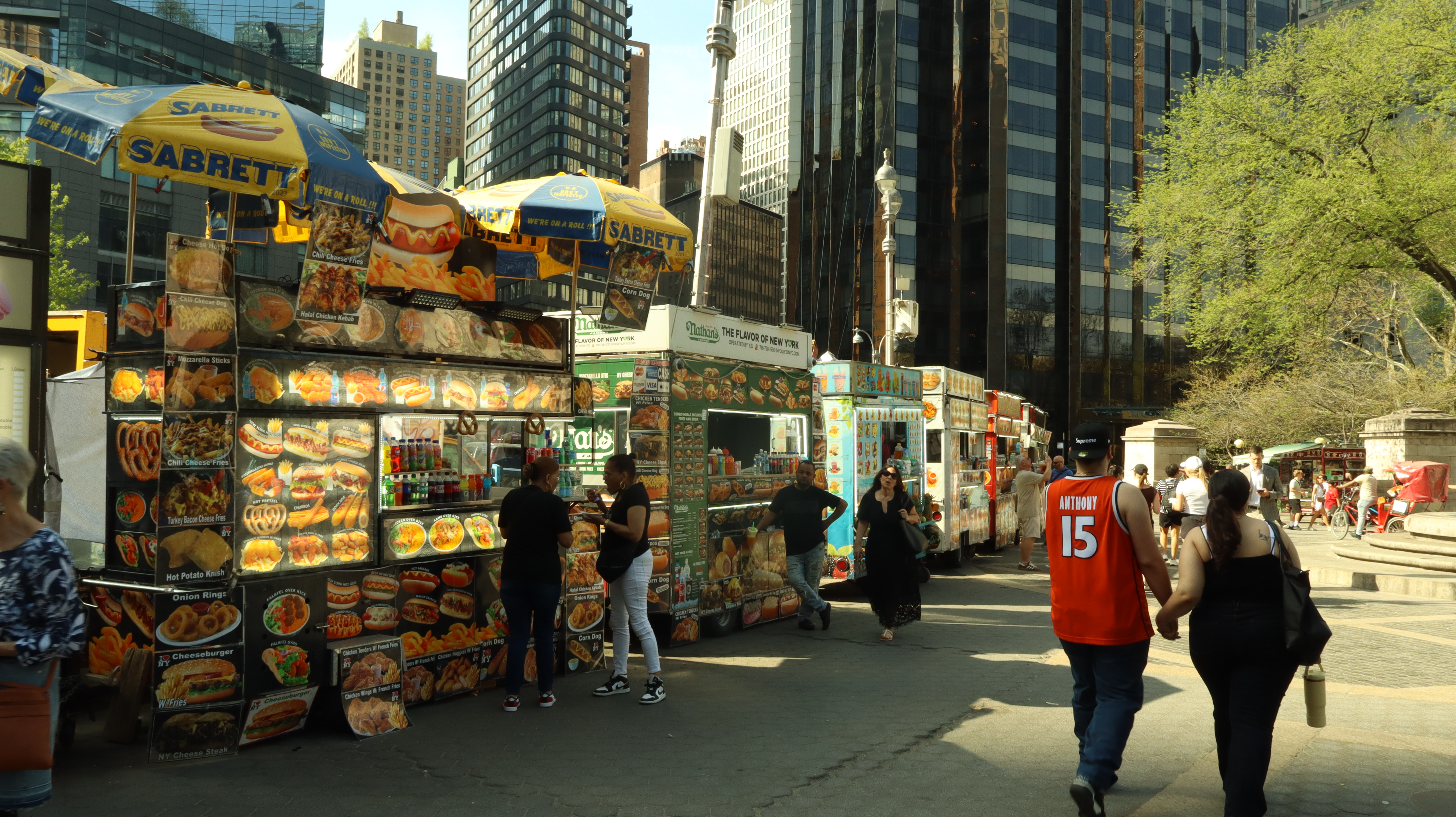
April 17, 2026
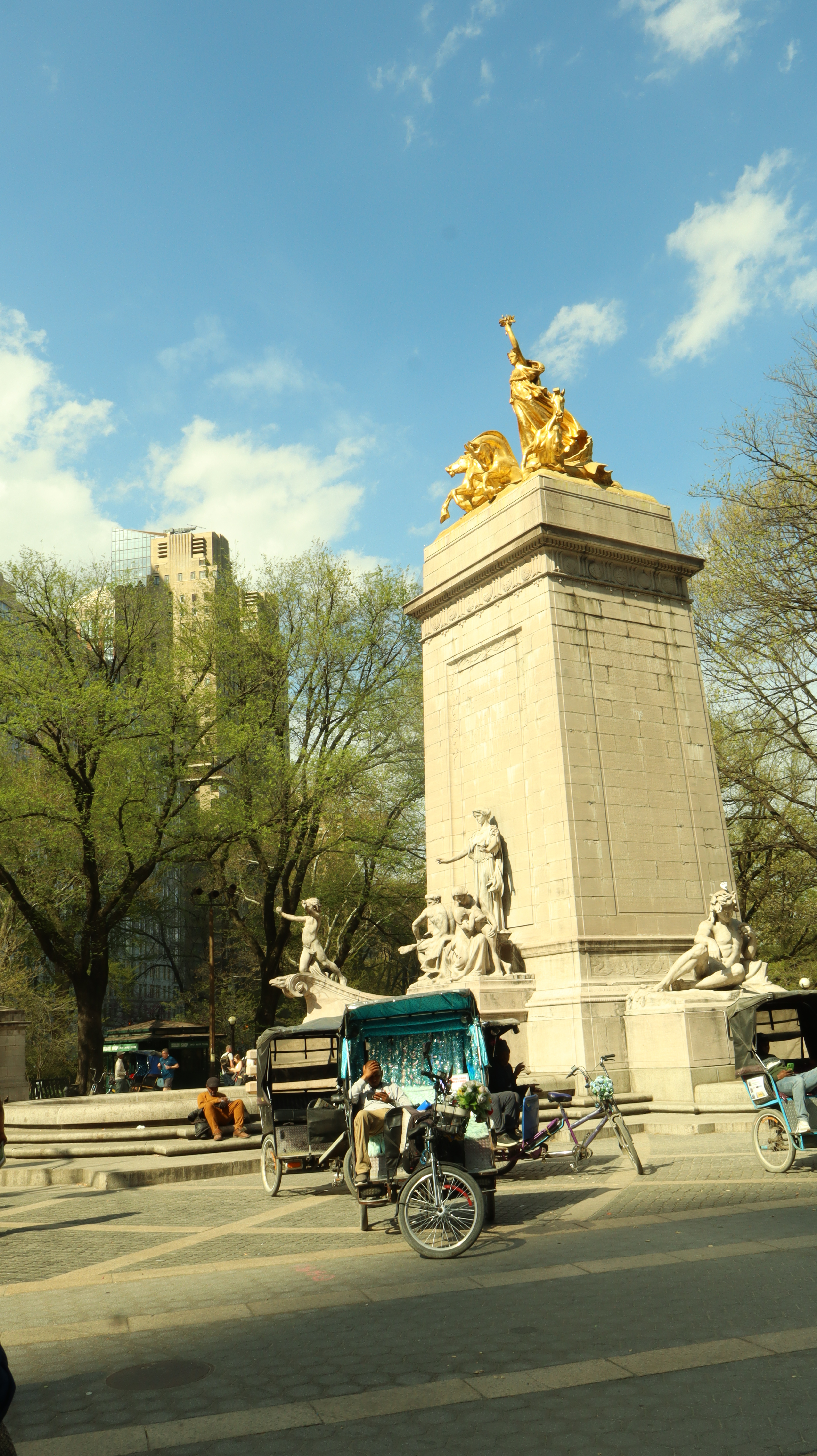
April 14th, 2026
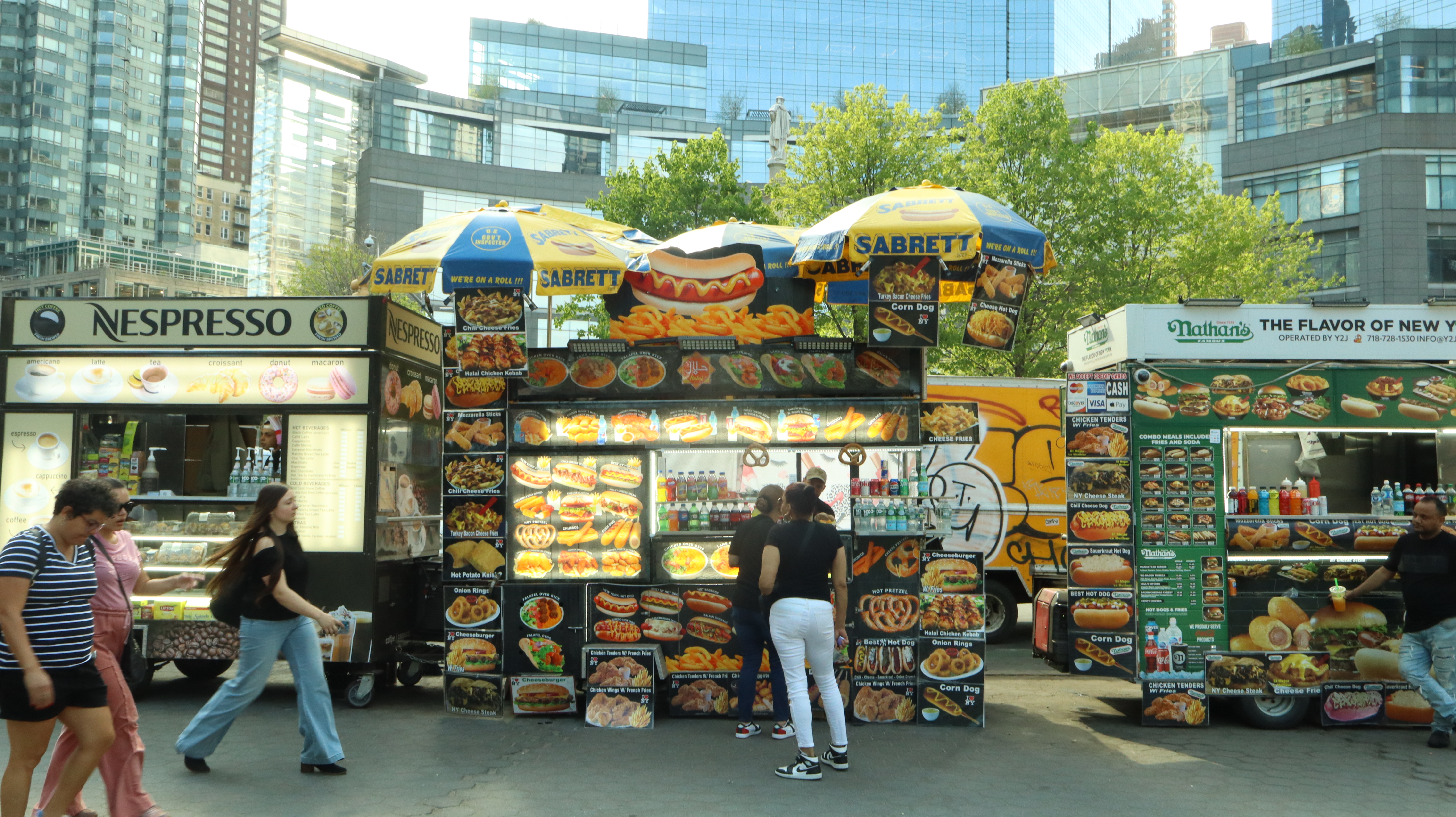
April 17, 2026
Fieldnotes
April 15
On April 15, our group visited the area around Central Park, especially near Columbus Circle, to observe halal vendors and the environment around their carts. One of the first things we noticed was how busy the area felt. Tourists, workers, cyclists, and people walking through the park were constantly moving through the space. The vendors were positioned near heavy foot traffic, which made their carts feel like part of the entrance to the park rather than separate from it.
During this visit, one vendor agreed to be interviewed and recorded. He was very kind and open to speaking with us, even though there were moments when language became a small barrier. When he did not understand certain words, he had a friend help translate, which made the interview feel more natural and conversational. This interaction helped us understand more about the vendor’s daily routine, the challenges of working in a crowded public space, and how halal carts become part of the everyday life around Central Park.
We also took photographs of the carts, the surrounding streets, and the park entrances. The carts were very visible, with bright signs, food images, and menus facing the sidewalk. Around them, the contrast between the park, the street, and the surrounding buildings made the vendors feel connected to both Central Park and the city outside it.
April 17
On April 17, we returned to Central Park to continue observing and to try to interview more vendors. This visit showed us how difficult fieldwork can be when people are busy, cautious, or uncomfortable being recorded. We approached several vendors and asked if they would be willing to speak with us, but none of them agreed to be recorded. Some were helping customers, some seemed hesitant, and others simply did not want to participate, which we respected.
Because we were not able to record another interview, we focused more on observation. We paid closer attention to the vendors’ routines and the space around their carts. They were constantly watching the sidewalk, waiting for customers, preparing food, answering questions, and staying aware of the crowd around them. Even when people only stopped for a few minutes, the carts created small moments of interaction at the edge of the park.
This second visit helped us see the vendors as active parts of Central Park’s social environment. They are not just background figures or places to quickly buy food. Their carts help shape how people move through, pause in, and experience the park’s entrances. Even without another recorded interview, the visit still gave us a better sense of how much labor, movement, and everyday connection happens around these vendors.
Final Report
Our project focused on the everyday worlds of halal vendors in Central Park, but by the end, it became about more than just food carts. As a group, we each came into the project noticing different parts of the park. Some of us paid more attention to the vendors themselves, some to the physical space around them, and some to how people moved through the area as customers, tourists, workers, and regular New Yorkers. Bringing those perspectives together helped us see Central Park less as one single public space and more as a place made up of many smaller routines and interactions.
One of the main things we learned is that Central Park is not just a natural or recreational space. It is also a workplace. For halal vendors, the park is a place where they spend long hours, interact with strangers, deal with crowds, and become part of the daily rhythm of the city. Before doing the project, it was easy to think of vendors as part of the background of the park, especially because food carts are so familiar in New York. But through observing them more closely, taking photographs, and speaking with one vendor, we started to see how much labor and presence goes into something that many people pass by without thinking about.
We also learned that ethnographic work depends heavily on trust. Since most vendors did not want to be recorded, we had to adjust our expectations and respect their boundaries. That made the project feel more honest because it reminded us that public spaces are not automatically open for study just because people are working in them. Everyone we approached had their own comfort level, schedule, and reasons for saying yes or no.
Overall, our final project shows Central Park as a space shaped not only by monuments, paths, and greenery, but also by the people who work there every day. The halal vendors help create the social life of the park by feeding people, speaking with customers, and occupying a space between labor, culture, and community. Through this project, we learned to look more carefully at the people who make familiar places feel alive.
 Vendors of Central Park Ethnography